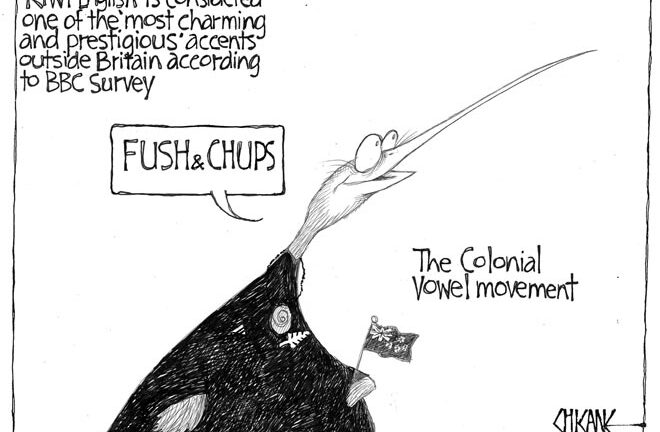
If you’ve ever met me and had difficulty understanding me or looked at me confused when I told you I was going home to bed (and you heard “bead”), welcome to the wild, raised-vowel world of New Zealand English. I came across this article from Te Ara and thought it was time I learned why I sound like I do and shed some light on the odd linguistic evolution behind my Kiwi acint.
The Origins: A “Colonial Twang”
Our accent is surprisingly young. When British settlers arrived in New Zealand in the 19th century, their kids went to school together and blended their regional British dialects—mostly from south-east England.
By the late 1800s, school inspectors were already writing horrified reports complaining about a new “colonial twang” taking over the classrooms. Researchers listening back to archival recordings found that kids born in the 1870s and 1880s had completely abandoned their parents’ regional British accents and picked up this brand-new, fast-spreading Kiwi way of speaking. Early commentators noted people saying “oi doy” for “I die,” clipping their -ing endings to -in’, and dropping their H‘s. Things such as the oi doy pronunciation or the final e endings on words are more distinctively antipodean.
A century later and that “twang” has evolved into one of the most distinct accents in the English-speaking world.
Vowel Gymnastics: Fush, Chups, and the Raising Vowels
I think this is the guts of why kiwi’s sound like we do. We shift vowels around in ways that confuse almost everyone else in the Anglosphere.
- The KIT Vowel (“Fush and Chups”): This is the ultimate litmus test between a New Zealander and an Australian. While Australians raise their short I sound so “fish and chips” sounds almost like “feesh and cheeps,” Kiwis push it down into the central “cut” sound. Yes, to the rest of the world, everyone I have met knows Kiwi’s and fush and chups.
- TRAP and DRESS (The “Pet” vs. “Pat” dilemma): In New Zealand English, the vowel in “trap” is raised so high in the mouth that overseas it sounds like “dress.” There’s a well-known story of a Kiwi named Pat who went abroad and had to start going by “Patrick” because everyone kept asking why his name was “Pet.” It’s bad enough trying to pronounce David in a non-NZ accent so people understand my name!
- DRESS to FLEECE: The vowel in “bed” is also raised, which is why when I say “bed,” people hear “bead,” or when I ask for the “best,” it sounds like “beast.”
- The NURSE Vowel: We pronounce the vowel in “nurse” with rounded lips, quite high and forward in the mouth. It overlaps so much with the GOOSE vowel that outsiders regularly hear us say “tombs” when we actually said “terms.”
“Beer” vs. “Bear”
One of the most noticeable recent shifts—and one I catch myself doing all the time—is merging the “beer” and “bear” vowels. To older generations or non-Kiwis, these are two completely distinct sounds. To many of us today, they are virtually identical. A “bottle of beer” and a “picture of a bear” share the exact same vowel space.
We also like to turn the letter L after a vowel into its own soft vowel sound (so “feel” becomes “fee-u”), and we stretch words like “grown” and “known” into two syllables: “growen” and “knowen.” Non-kiwi friends have told me before, “Why do you say known like it’s two words?”
Regional Character & Māori English
Not all Kiwis sound identical, either.
If you head down to the bottom of the South Island—around Southland and Otago—you’ll hear the famous Southland Rolling ‘R’. Inherited from the original Scottish settlers who farmed the region, it’s the only true regional dialect in the country, where people pronounce a distinct, rolling R after vowels.
Then there is Māori English, an increasingly influential and rhythmic variety of New Zealand English spoken by many Māori and Pākehā (European New Zealanders) alike. It features a distinct cadence, a fronted pronunciation of the GOOSE vowel, a High Rising Terminal intonation (where statements rise at the end like a question), and the frequent, iconic tag at the end of a sentence: “…eh?”
From “Cultural Cringe” to Top of the Charts
For a long time, New Zealanders suffered from a bit of “cultural cringe” about the way we talked, assuming our accent was just laziness or sloppy grammar.
But the world sees it differently now. In a massive British survey ranking 34 global accents, the New Zealand accent was voted the most attractive and prestigious non-British accent in the world—placing 6th overall for social attractiveness and comfortably beating out our neighbors across the Tasman Sea. SUrely this is fake news? It’s difficult for me to believe, based on the criticism and commints I receive!
So if you hand me a safety pin when I asked for a pen, or offer to fight a grizzly when I just asked for a cold beer, just blame it on 150 years of shifted vowels!
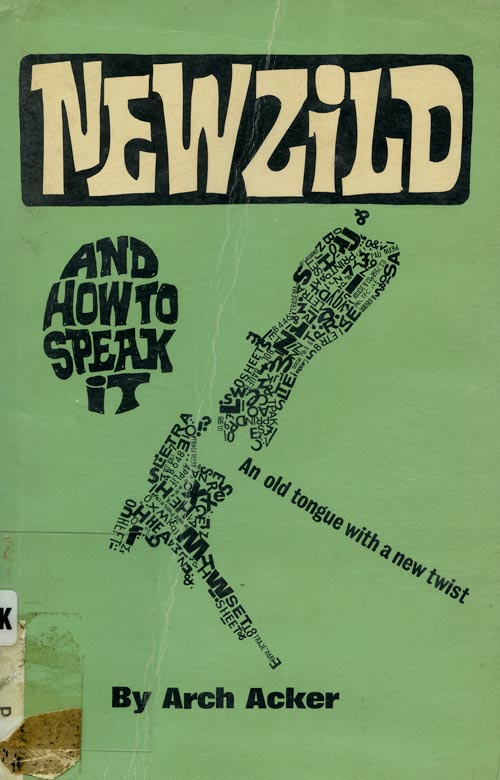
Want to know more? See NewZild explained.

Comments RSS Feed